Machine Tending Solutions That Improve Safety and Throughput
Machine tending is one of those factory tasks that looks simple from a distance and becomes far more complex once you stand next to the machine. Open the door. Load the blank. Close the door. Press cycle start. Wait. Unload the finished part. Repeat hundreds or thousands of times per shift. The sequence sounds straightforward until real production enters the picture, with hot parts, slick coolant, variable stock, awkward reaches, changing cycle times, and operators who are expected to keep quality high while moving fast.
That is why machine tending automation has become such a practical investment for manufacturers. The right solution does more than replace manual loading. It reduces exposure to pinch points, sharp edges, and repetitive strain. It stabilizes output. It helps shops absorb labor shortages without lowering standards. When designed properly, it also creates a cleaner handoff between people and machines, where operators supervise, inspect, and troubleshoot rather than spend an entire shift feeding one piece of equipment.
The gains are real, but they do not come from dropping a robot in front of a machine and hoping for the best. Safety and throughput improve when the system is engineered around the actual process, the part, the machine, and the people who will live with it every day.
Why machine tending succeeds or fails on the details
A machine tending cell is a chain of small decisions. How the raw parts are presented matters. How the robot grips the part matters. The position of the chuck, vise, or fixture matters. Door timing matters. So does chip buildup, coolant splash, part orientation, and whether the machine can signal a clean cycle complete every time.
Many disappointing automation projects begin with a narrow question: can a robot reach the machine? That is a necessary check, but it is nowhere near sufficient. The better question is whether the entire cycle can run predictably for hours without intervention. Reach is only one variable. Repeatability, part consistency, communication logic, fault recovery, and maintenance access are often what separate a strong system from an expensive headache.
In CNC automation, for example, the robot may only spend a few seconds physically handling the part. The rest of the cycle depends on everything around that handling step. If the incoming blanks are warped, oily, or mixed between lots, the gripper must tolerate variation or the system will stop constantly. If the machine fixture is prone to chip nesting, the robot may place the part correctly and still create a scrap condition. If the operator cannot quickly recover from a minor interruption through clear HMI programming, uptime falls apart even when the mechanical design is sound.
That is the daily reality of machine tending. The robot is visible. The process discipline behind it is what delivers results.
Safety improvements that matter on the floor
The most obvious safety benefit is removing people from direct interaction with moving machine components during repetitive loading and unloading. On lathes, mills, grinders, saws, presses, and washing stations, that alone reduces risk. A robot does not get distracted, lean too far into a work envelope, or try to save three seconds by cutting a corner around an interlock sequence.
Still, safety is not automatic. A machine tending cell can reduce some risks and introduce others if the design is careless. I have seen cells where guarding was technically compliant but practically hostile, making maintenance and cleaning so awkward that people developed bad habits just to keep production moving. That is a warning sign. A safe cell must also be usable.
A strong design usually addresses three layers at once. First, it separates people from hazardous motion through guarding, area scanners, interlocks, and controlled access points. Second, it reduces manual handling risks by presenting parts at a comfortable height and orientation. Third, it simplifies operator tasks so interventions are infrequent and clear.
This is where experience shows up. Consider a shop loading steel forgings into a vertical machining center. The initial conversation often focuses on guarding and light curtains. Those matter, but the bigger improvement may come from how the forgings arrive to the cell. If operators no longer need to lift a 20 pound part from a deep gaylord, rotate it, wipe it, and place it into a fixture every minute, shoulder strain and hand injuries drop sharply. Sometimes the feeder design does as much for safety as the robot itself.
Another overlooked area is hot and dirty parts. In many production environments, machine tending means contact with components that come out warm, oily, or covered in chips. Manual operators adapt, often with gloves, rags, and routines built from experience. A robot can eliminate that exposure entirely, provided the end of arm tooling and part presentation are built for contamination. If not, the system starts dropping parts or misgripping, and people get pulled back into the hazardous zone to clear jams.
Good safety in automation tends to look uneventful. There are fewer reaches into machines, fewer improvised tools, fewer awkward lifts, and fewer moments where a person feels rushed around moving equipment. That lack of drama is the point.
Throughput is won in the handoff time
Most shops pursue machine tending for labor efficiency, but throughput is often the bigger payoff. A robot does not need a break between cycles. It does not slow in the last hour of the shift. It can load consistently at 2:00 a.m. On a Sunday if the upstream and downstream process supports it.
The opportunity usually lives in handoff time, not in machine cycle time. If a machining cycle takes 90 seconds and a human takes 20 seconds to unload, clear chips, reload, and restart, the non-cut time is significant. Reduce that handoff to 8 or 10 seconds and the machine spends a larger share of the day making chips instead of waiting.
The difference compounds quickly. On one machine, shaving 10 seconds from each cycle may seem modest. Over a multi-shift schedule, it can translate into hundreds of additional parts per week, especially on medium-cycle jobs. The exact number varies with uptime, shift patterns, and changeover frequency, but the principle holds across a wide range of applications.
Throughput gains become more pronounced when one operator is tending several automated cells rather than standing in front of one machine. That changes the labor model from direct loading to exception management. The operator handles material replenishment, quality checks, and occasional resets. The robot handles the repetitive motion. When executed well, this is where machine tending moves from a single-station improvement to a meaningful production strategy.
There is a caveat worth stating plainly. Automation can expose weaknesses that manual labor was hiding. If the process depends on an experienced operator subtly correcting part orientation, clearing chips before every load, or noticing a clamp issue before it becomes scrap, the robot will force those issues into the open. That can be frustrating at first. It is also valuable. Stable throughput comes from fixing process variation, not from expecting automation to ignore it.
Choosing the right level of automation
Not every machine tending solution needs to be a fully enclosed six-axis robot cell with infeed conveyors, vision systems, and automatic dunnage handling. Sometimes a simple gantry, cobot, or rotary index setup is the best answer. The right level depends on part variety, cycle time, footprint, changeover frequency, and budget.
High-volume, low-mix work often justifies dedicated automation with robust fixturing and hard stops. It is easier to optimize when every incoming part is nearly identical and the machine runs the same family of parts for long periods. In that environment, custom end of arm tooling can be tuned tightly for speed and reliability.
High-mix shops face a different equation. Flexibility matters more, and changeover pain can erase the value of automation if the system is too rigid. In these cases, a more adaptable gripper, modular fixture package, and intuitive HMI programming become central to success. The extra engineering may be justified if it allows the cell to move between jobs without a specialist spending half a day on reconfiguration.
The word flexible gets used loosely in automation sales conversations. In practice, flexibility has a cost. A gripper designed to handle ten part shapes may be slower, bulkier, or less tolerant than one built for a single part. A machine tending cell that can serve three machines may be harder to schedule than a dedicated setup. The goal is not maximum flexibility. It is the right amount of flexibility for the production mix you actually run.
End of arm tooling is where theory meets reality
If there is one part of the system that deserves more attention than it usually gets, it is end of arm tooling. EOAT is the robot’s hand, but that description undersells it. In machine tending, the gripper often determines whether the project becomes dependable production equipment or a constant source of stops.
A gripper must hold the part securely, place it repeatably, survive coolant and chips, and avoid damaging finished surfaces. It must also fit around machine doors, vises, chucks, and fixtures without awkward robot motion. On dual-grip applications, it may need to unload a completed part and load a raw blank in a single entry to minimize handoff time.
That sounds manageable until you apply real constraints. Perhaps the raw blank is rough cast and varies by a few millimeters. The finished part is machined on the same surfaces you would prefer to grip. Coolant makes everything slick. The machine door opening is smaller than ideal. Now the gripper has to manage raw variation on one side, finished part protection on the other, and maintain enough stiffness to avoid placement errors.
This is where practical EOAT design pays off. Simple often wins. A well-machined hard jaw, compliant locating feature, and reliable sensor package can outperform a more elaborate concept that looks clever in CAD but struggles on the floor. Vacuum gripping can work well for certain flat components, but coolant, porosity, and chip contamination often make mechanical gripping the safer bet in metalworking environments.
Sensor strategy matters too. A part present sensor is helpful, but one sensor rarely tells the whole story. Depending on the risk, you may want confirmation of gripper open and closed states, part detection in each nest, and fixture clamp verification before cycle start. Over-instrumenting a cell is possible, but under-instrumenting it often leads to longer debugging and harder recovery when something goes wrong.
The machine tool interface is often the hidden bottleneck
A robot cell is only as reliable as its communication with the machine it serves. This is one of the least glamorous parts of the project and one of the most important. A clean handshake between robot and machine tool prevents collisions, missed cycles, and frustrating nuisance faults.
Older machines can usually be automated, but they often require more creative interface work. Newer CNC automation projects tend to benefit from standard robot-ready options, automatic doors, and clearer I/O mapping. Even then, details matter. The system needs unambiguous signals for cycle complete, door open, door closed, chuck or vise status, alarm state, and safe-to-enter conditions.
The interface should also account for abnormal situations, not just the happy path. What happens if a machine alarm occurs with the robot waiting at the load station? What if the chuck does not unclamp fully? What if an operator requests a single-cycle run for first-piece inspection? If those scenarios are not considered early, the control logic becomes messy later.
This is where strong HMI programming earns its keep. Operators should be able to understand the cell’s status in a few seconds. They should know whether the robot is waiting on the machine, the machine is waiting on part load, or a peripheral device has faulted. Recovery instructions should use plain language, not cryptic internal tags. A good HMI reduces downtime because it shortens the path from confusion to action.
One of the best HMIs I have seen did not try to impress anyone. It used simple screens, clear status indicators, and guided recovery prompts tied to each common fault. New operators were productive quickly. Maintenance could access deeper diagnostics without navigating a maze of menus. That cell ran well not because the graphics were fancy, but because the information matched the decisions people needed to make.
Integrating machine tending with robotic welding and downstream operations
Machine tending is often discussed as a standalone task, but its value increases when it fits into a broader production flow. A shop that already uses robotic welding, inspection, washing, deburring, or palletizing can gain more by linking those steps intelligently than by optimizing each one in isolation.
Take a welded assembly that moves to machining after the weld cell. If robotic welding improves consistency in tack-up and final weld geometry, the machining cell may be able to rely on more stable datums and reduce manual touch-off or rework. Likewise, a machine tending cell that presents finished parts in a known orientation can simplify downstream gauging or packaging.
There is also a scheduling benefit. When upstream and downstream cells communicate clearly, the shop can manage bottlenecks instead of creating them. A machine tending cell that doubles spindle utilization sounds great until the wash station or inspection bench becomes the next queue. Throughput should be measured across the process, not just at the robot.
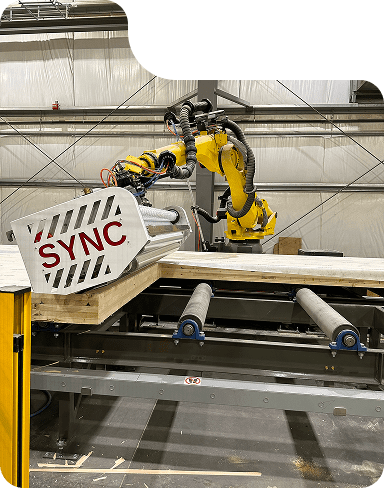
Some of the strongest automation programs start with one cell and expand carefully. The first project teaches the team how to think about fixturing, part flow, guarding, and controls support. The next project can then reuse design standards, HMI conventions, and maintenance practices. That accumulated experience matters more than marketing claims about turnkey ease.
Common design decisions that pay back quickly
A few choices consistently improve results across machine tending applications:
-
Design raw part presentation for consistency. Trays, racks, pallets, or escapements that orient parts predictably will usually outperform dumping parts into bins and relying on recovery logic later.
-
Make access for cleaning and maintenance easy. Chips, coolant residue, and wear are unavoidable. If daily upkeep takes too long, it will be skipped, and reliability will suffer.
-
Build operator recovery into the control philosophy. Clear prompts, guided restart sequences, and safe manual modes reduce the need for specialist intervention.
-
Prove the gripper on real parts, not just nominal samples. Production variation has a way of showing up after launch, when fixing it is more expensive.
-
Track OEE or at least basic downtime categories from day one. You cannot improve what you cannot see, and vague complaints about uptime rarely lead to useful action.
That list is short on purpose. Most successful cells are not built on exotic ideas. They are built on disciplined execution of fundamentals.
What shops often underestimate during deployment
The mechanical installation gets most of the attention, but deployment problems usually come from the gaps between disciplines. Electrical teams need accurate I/O definitions. Controls teams need finalized sequences. Tooling designers need part variation data. Operators need training that reflects the real production sequence, not just https://jsbin.com/pawuxeruyu the demo cycle.
Timing also matters more than many expect. A robot may execute its motion perfectly, yet the cell still misses throughput targets because the machine takes too long to open and close doors, the chuck confirmation is slow, or the part queue is awkward to replenish. Those seconds add up. During runoff, it is worth measuring the entire sequence with a stopwatch and asking where non-value time hides. The answer is not always inside the robot path.
Change management deserves equal attention. Some operators will welcome automation immediately. Others will view it as a threat or an impractical experiment. The fastest way to create resistance is to install a cell that is difficult to use and then blame the people running it. The better approach is to involve experienced operators early, especially the ones who know where the real process problems live. They often point out risks that never appear in a conference room.
I have seen veteran machinists catch fixture problems, chip evacuation issues, and part handling risks within minutes of reviewing a concept. That input is invaluable. Machine tending works best when the automation team listens to the people who understand the machine’s personality under real production conditions.
Measuring whether the cell is truly improving performance
It is easy to claim success because the robot runs. The more useful question is whether the cell improved the right metrics. Throughput matters, but so do first-pass yield, downtime frequency, labor allocation, maintenance burden, and safety exposure.
A project can hit its cycle time goal and still disappoint if false faults happen ten times a shift. Another cell might run slightly slower than the sales estimate and still be a strong investment because it enables unattended operation across breaks and shift changes. Context matters.

For most facilities, a practical evaluation includes labor hours per part, spindle uptime, unplanned stoppages, scrap rate, and how often operators must enter the cell. If the robot reduces direct loading labor but creates constant intervention, the design needs work. If throughput climbs while ergonomic complaints and minor incidents fall, that is the kind of improvement worth scaling.
The best teams revisit the cell after launch with a critical eye. They modify gripper pads that wear too fast. They tighten recovery screens. They change tray pitch to improve reach. They add sensors where fault diagnosis is weak. None of that signals failure. It signals ownership. The first version gets you into production. The refinements are what turn the cell into a dependable asset.
Where machine tending delivers the strongest return
Not every operation needs automation immediately, but some are clear candidates. Repetitive loading tasks with stable part geometry, moderate to high volume, and meaningful manual handling risk are often near the top of the list. Machines with significant cycle time and predictable changeovers also tend to justify the investment more readily than highly erratic, one-off work.
A good machine tending application usually has enough repetition to benefit from automation and enough pain to make the effort worthwhile. Pain can mean labor scarcity, ergonomic risk, inconsistent output, or simply expensive machine tools sitting idle while waiting for an operator’s hands.
When manufacturers approach the decision this way, safety and throughput stop competing with each other. They reinforce each other. The same design choices that remove people from repetitive, hazardous interactions also reduce delays, standardize motion, and make production more repeatable. That is the real promise of machine tending, not replacing people, but using automation to put both people and machines in roles where they perform better.
Done well, machine tending changes the rhythm of a shop. Operators spend less time feeding spindles and more time checking quality, managing flow, and solving problems before they become downtime. Machines cut more and wait less. Safety becomes less dependent on perfect human habits around repetitive tasks. Throughput becomes less vulnerable to staffing swings.
That is not a futuristic vision. It is a practical one, and it is already playing out in shops that treat machine tending as a production system, not just a robot purchase.
Sync Robotics Inc. — Business Info (NAP)
Name: Sync Robotics Inc.Address: 2-683 Dease Rd, Kelowna, BC V1X 4A4
Phone: +1-250-753-7161
Website: https://www.syncrobotics.ca/
Email: [email protected]
Sales Email: [email protected]
Hours:
Monday: 8:00 AM – 4:30 PM
Tuesday: 8:00 AM – 4:30 PM
Wednesday: 8:00 AM – 4:30 PM
Thursday: 8:00 AM – 4:30 PM
Friday: 8:00 AM – 4:30 PM
Saturday: Closed
Sunday: Closed
Service Area: Kelowna, British Columbia and across Canada
Open-location code (Plus Code): VHWR+PQ Kelowna, British Columbia
Map/listing URL: https://maps.app.goo.gl/xwtV2wEu8ZuKH3se8
Embed iframe:
Socials (canonical https URLs):
LinkedIn: https://www.linkedin.com/company/syncrobotics/
Instagram: https://www.instagram.com/syncrobotics/
Facebook: https://www.facebook.com/syncrobotics/
https://www.syncrobotics.ca/
Sync Robotics Inc. is an industrial robot and controls integration company based in Kelowna, British Columbia.
The company designs and deploys automation solutions for manufacturing operations across Canada.
Services include industrial robotics integration, controls integration, automation system design, deployment support, and related manufacturing automation solutions.
Sync Robotics Inc. is located at 2-683 Dease Rd, Kelowna, BC V1X 4A4.
To contact Sync Robotics Inc., call +1-250-753-7161 or email [email protected].
For sales inquiries, email [email protected].
Hours listed are Monday to Friday 8:00 AM–4:30 PM, with Saturday and Sunday closed.
For directions and listing details, use the map listing: https://maps.app.goo.gl/xwtV2wEu8ZuKH3se8
Popular Questions About Sync Robotics Inc.
What does Sync Robotics Inc. do?Sync Robotics Inc. designs and deploys industrial robot and controls integration solutions for manufacturing operations.
Where is Sync Robotics Inc. located?
Sync Robotics Inc. is located at 2-683 Dease Rd, Kelowna, BC V1X 4A4.
Does Sync Robotics Inc. serve clients outside Kelowna?
Yes—Sync Robotics Inc. is based in Kelowna, British Columbia and serves clients across Canada.
What are Sync Robotics Inc.’s hours?
Monday–Friday: 8:00 AM–4:30 PM; Saturday and Sunday closed.
How can I contact Sync Robotics Inc.?
Phone: +1-250-753-7161
General Email: [email protected]
Sales Email: [email protected]
Website: https://www.syncrobotics.ca/
Map: https://maps.app.goo.gl/xwtV2wEu8ZuKH3se8
LinkedIn: https://www.linkedin.com/company/syncrobotics/
Instagram: https://www.instagram.com/syncrobotics/
Facebook: https://www.facebook.com/syncrobotics/
Landmarks Near Kelowna, BC
1) Kelowna International Airport2) UBC Okanagan
3) Rutland
4) Orchard Park Shopping Centre
5) Mission Creek Regional Park
6) Downtown Kelowna
7) Waterfront Park